
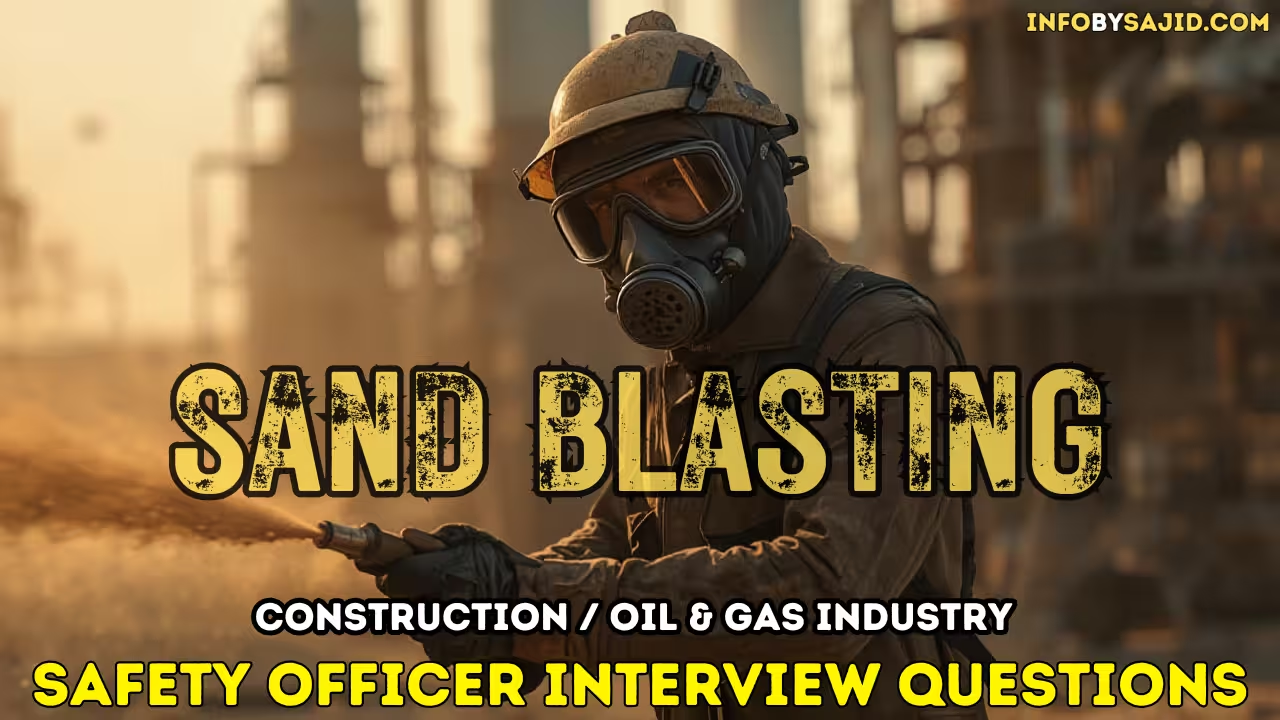
Basic Safety Notes & Interview Questions on Sand Blasting (Abrasive Blasting) – Sand Blasting also known as abrasive blasting, is a high risk activity commonly used at construction, oil & gas, and industrial sites to remove rust, old paint, scale, and surface contaminants. In Saudi Arabia and across the world, leading organizations such as Saudi Aramco, SABIC, Ma’aden, NEOM, SEC, STC, and the Royal Commission strictly follow international safety standards to control hazards related to dust exposure, noise, flying particles, and high pressure equipment. Strong knowledge of sand blasting safety procedures, PPE requirements, and control measures is essential for HSE professionals and is frequently assessed during interviews.
Globally recognized companies such as Shell, BP, Total Energies, ExxonMobil, Chevron, Bechtel, Fluor, and Halliburton focus on Sand (Abrasive) Blasting hazards, respiratory protection, containment systems, and safe work practices during HSE interviews. These basic safety notes and interview questions are specially designed for freshers and beginners to help them understand Sand (brasive) Blasting safety clearly and answer interview questions with confidence.
Table of Contents
Sand (Abrasive) Blasting – Safety Officer Interview Questions
1. What is Sand / Abrasive Blasting Used For?
Sand (abrasive) blasting is used to clean and prepare surfaces. It helps achieve a clean, rough surface that improves paint and coating adhesion.
Main Uses:
- To remove rust
- To remove old paint or coatings
- To clean pipes, tanks, steel structures, and other equipment
- To prepare the surface for painting or coating
2. Can We Use Silica Sand for Sand (Abrasive) Blasting?
No, Silica sand must not be used for abrasive or sand blasting. Using approved abrasive materials helps protect workers health and comply with safety regulations.
Reason:
- Silica dust is extremely harmful when inhaled
- It can cause silicosis, a serious lung disease
- It may also lead to lung and kidney diseases
Safe Alternative:
- Approved garnet or grit should be used instead of silica sand.
3. Hazards of Sand (Abrasive) Blasting
Sand (Abrasive) Blasting involves several serious safety and health hazards if not properly controlled. Proper PPE, approved abrasives, and controlled blasting procedures are essential to reduce these hazards.
Main Hazards:
- High noise levels
Can cause hearing damage without proper ear protection. - High pressure
Blasting equipment operates at high pressure and can cause severe injuries. - Toxic materials
Old paint or coatings being removed may contain toxic substances (e.g. lead, heavy metals). - Dust generation
Dust can cause respiratory problems and reduce visibility.
4. What is a Whip Arrestor?
A whip arrestor (Whip Check) is a safety cable used on compressed air hoses. Whip arrestors are essential during Sand (Abrasive) Blasting and other high pressure air operations to prevent serious injuries.
Purpose of a Whip Arrestor:
- It is connected across air hose couplings
- Prevents hoses from whipping or flying violently
- Protects workers if the hose accidentally separates or fails.
5. Equipment Used in Sand / Abrasive Blasting
Sand (Abrasive) Blasting requires specialized equipment to operate safely and effectively. All equipment must be properly inspected and maintained before use to ensure safety.
Main Equipment Used:
- Blasting Nozzle
Directs the abrasive material at high speed onto the surface. - Air Hoses
Carry compressed air and abrasive from the blasting pot to the nozzle. - Air Compressor
Supplies the required compressed air pressure. - Air Receiver
Stores compressed air and maintains steady pressure. - Air Filter / Moisture Separator
Removes moisture and contaminants from compressed air. - Blasting Pot (Abrasive Pot)
Holds and feeds the abrasive material into the air stream.
6. Precautions for Sand (Abrasive) Blasting
Sand (Abrasive) Blasting is a high risk activity, so strict safety precautions must be followed. Following these precautions protects workers, prevents accidents, and ensures compliance with safety standards.
Required Precautions:
- Obtain a valid Permit to Work before starting blasting activities.
- Ensure all operators are trained and certified in Sand (Abrasive) Basting operations.
- Do not use combustible abrasives (e.g. nut shells) that can form explosive mixtures with air.
- Inspect and test air compressors supplying breathing air before use.
- Breathing air must comply with Grade D air quality standards.
- Blasting operators must wear an air supplied hood with a Type “CE” supplied air respirator approved for Sand (Abrasive) Blasting.
- Use additional PPE, such as:
- Protective apron
- Rubber-insulated leather gloves
- Hearing protection
- Ensure the nozzle is fitted with a Dead Man switch to stop blasting if released.
- Restrict unauthorized entry by proper supervision and barricading.
- Provide hearing protection (ear plugs or ear muffs) to the entire blasting team.
- Ensure all equipment is properly grounded and bonded to prevent static electricity.
- Assign a dedicated compressor operator to shut down the system in case of emergency.
- Use a CO detector to monitor carbon monoxide levels in breathing air.
- Never point the blasting nozzle at any person.
- Install warning signage, such as “Keep Away – Sand Blasting in Progress”.
- Ensure competent supervision is present at all times.
1 thought on “Maryam Ko Batayn Web Portal Registration 2026 – Ramadan Relief Package”