
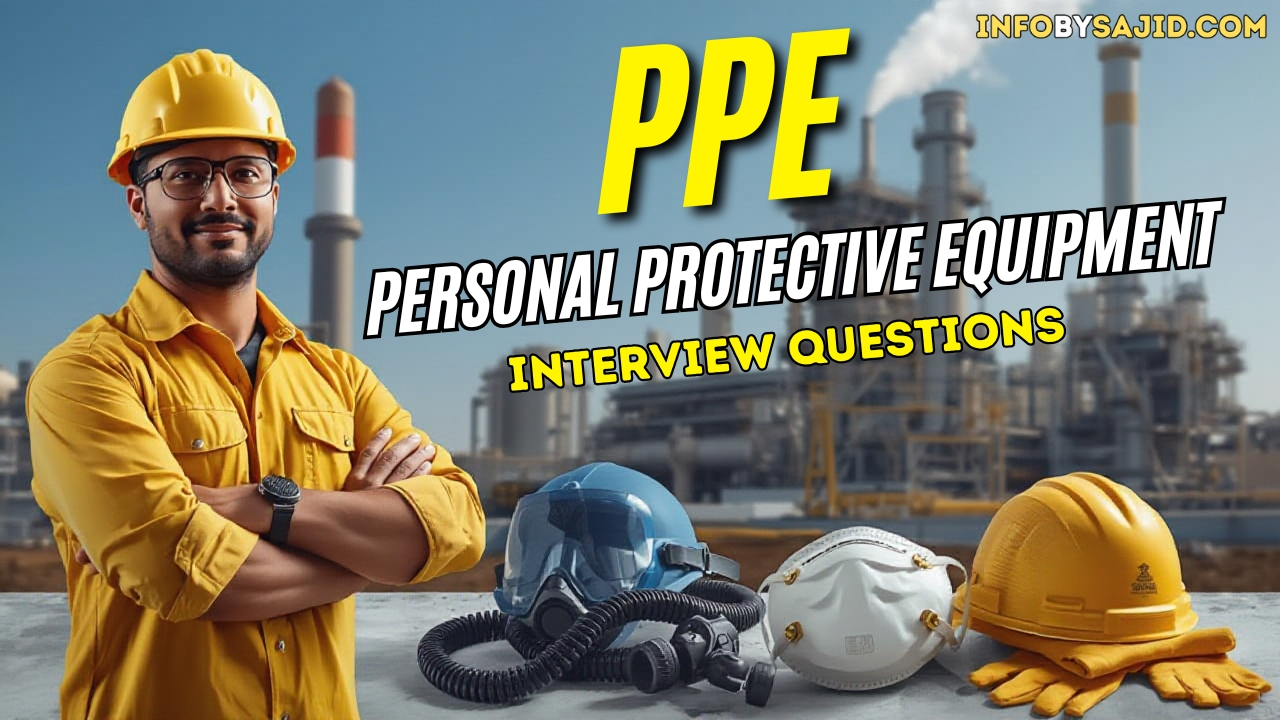
Basic Safety Notes & Interview Questions on PPE (Personal Protective Equipment) – PPE is one of the most important topics in the Health, Safety, and Environment (HSE) field, especially for freshers who want to build a career in Saudi Arabia and other countries. Leading companies such as Saudi Aramco, SABIC, Ma’aden, NEOM, SEC, STC, and the Royal Commission strictly follow international safety standards and give high importance to the correct use of PPE at workplaces. Therefore, strong knowledge of PPE is essential to prevent injuries, reduce health risks, and succeed in HSE interviews.
Globally recognized companies like Shell, BP, Total Energies, ExxonMobil, Chevron, Bechtel, Fluor, and Halliburton also focus on PPE awareness, types, and practical usage during HSE interviews. These basic safety notes and interview questions are specially designed for freshers and beginners to help them understand PPE concepts easily and answer interview questions with confidence.
Table of Contents
PPE – Personal Protective Equipment Questions
1. What is PPE ( Personal Protective Equipment) ?
PPE stands for Personal Protective Equipment. It refers to protective clothing and equipment that workers wear to protect themselves from workplace hazards.
Examples of PPE include:
- Safety helmet
- Safety shoes
- Safety glasses
- Goggles
- Gloves
- Ear protection
Purpose of PPE:
- To reduce the risk of injury and accidents
- To protect workers from physical, chemical, and environmental hazards
- To ensure safe working conditions
2. What is Mandatory PPE and Special PPE?
Mandatory PPE are the basic safety equipment that everyone must wear on site, regardless of the job they are doing.
Common Mandatory PPE include:
- Safety helmet
- Safety glasses
- Safety shoes
These PPEs are compulsory for all workers and visitors on site.
Special PPE are required for specific jobs or hazardous activities. They are selected based on the nature of the work and the level of risk.
Examples of Special PPE:
- Face shield for grinding work
- SCBA (Self Contained Breathing Apparatus) for emergency rescue
- Welding hood for welding jobs
3. Which standard should a safety helmet comply with?
A safety helmet should comply with the ANSI standard. ANSI stands for American National Standards Institute.
Helmet Standard:
- ANSI Z89.1
This standard ensures that the helmet provides proper head protection against:
- Impact
- Penetration
- Electrical hazards (depending on helmet class)
4. Which standard should safety glasses comply with?
Safety glasses should comply with the ANSI standard. ANSI stands for American National Standards Institute.
Safety Glasses Standard:
- ANSI Z87.1
This standard ensures that safety glasses provide proper eye protection against:
- Flying particles
- Dust
- Impact hazards
5. Which PPE should be worn during an emergency to rescue personnel?
In case of an emergency, SCBA should be worn for rescue operations. SCBA stands for Self Contained Breathing Apparatus.
Why SCBA is required:
- Provides clean and breathable air
- Protects the rescuer from toxic gases, smoke, or oxygen-deficient atmospheres
- Essential for emergency rescue situations
6. What is RPE?
RPE stands for Respiratory Protective Equipment. It is used to protect workers’ lungs and breathing from harmful conditions at the workplace.
RPE protects against:
- Low oxygen environments
- Harmful dust and fumes
- Smoke and mist
- Toxic gases and vapors
7. How many types of respirators?
Respirators are devices used to protect workers from harmful air contaminants. There are two main types:
- Air Purifying Respirators (APR)
- Air Supplying Respirators
1️⃣ Air-Purifying Respirators (APR)
These respirators clean the air you breathe by using filters, cartridges, or canisters.
Examples include:
- Dust mask
- Cartridge-operated mask (half-face or full-face)
Use:
- Remove dust, chemicals, gases, and other harmful particles from the air
2️⃣ Air-Supplying / Atmosphere-Supplying Respirators
These respirators provide clean air from an external source, rather than filtering the surrounding air.
Types:
- SCBA (Self-Contained Breathing Apparatus):
- The user carries the air supply
- Used in emergencies
- Must have at least 30 minutes of service life
- SAR / SABA (Supplied Air Respirators / Supplied Air Breathing Apparatus):
- The air supply is not carried by the user (supplied via hose or pipeline)
- Used for abrasive blasting or continuous flow operations
Important Notes for Air Supplying Respirators:
- Must be positive pressure type
- Full face mask must be used for full protection
8. What is Positive Pressure and Negative Pressure?
Respirators can operate under positive pressure or negative pressure.
1️⃣ Positive Pressure
- The air pressure inside the mask is equal to or higher than outside air pressure.
- This prevents contaminants from entering the mask, even if there is a small leak.
- Used in: SCBA and supplied air respirators
Simple Example:
Imagine gently inflating a balloon inside your mask air will push outward and stop dirty air from coming in.
2️⃣ Negative Pressure
- The air pressure inside the mask is lower than the outside air pressure.
- Air enters the mask only when you inhale, and leaks can allow contaminants in.
- Used in: Most air-purifying respirators (like dust masks)
Simple Example:
When you breathe in with a dust mask, the mask “sucks” air in, but if the seal isn’t tight, outside air can leak in.